
The following piece was written by Tim Stone, Innovasea’s Vice President of Aquaculture Technology. With more than 30 years of experience in engineering and product development, Tim offers his thoughts on the unintended consequences of adding camera-integrated water quality sensors.
The aquaculture industry has long been shaped by innovation and adaptability, maximizing value out of every piece of equipment, site, and system. One example has been the push to make cameras an all-in-one solution, equipping them with water quality sensors. While this addition may appear convenient at first glance, there are several significant risks and trade-offs that accompany this.
When managing fish health, feeding efficiency, and biomass risk, how and where data is collected matters just as much as the data itself. It’s why we continue to build upon our environmental sensors as stand-alone products and have no plans to fully integrate all environmental monitoring sensors into our cameras.
Here are six reasons why purpose-built, sensor deployments provide advantages that integrated camera sensors cannot match.
#1 Sensor location determines data quality
Dissolved oxygen (DO) and salinity are not uniform within a cage. They vary significantly with depth, biomass density and fish behavior. This becomes further complicated when accounting for changing currents, seasonal stratification, and even time of day. With the only constant being change, it becomes essential to have continuous data precisely where the fish are.
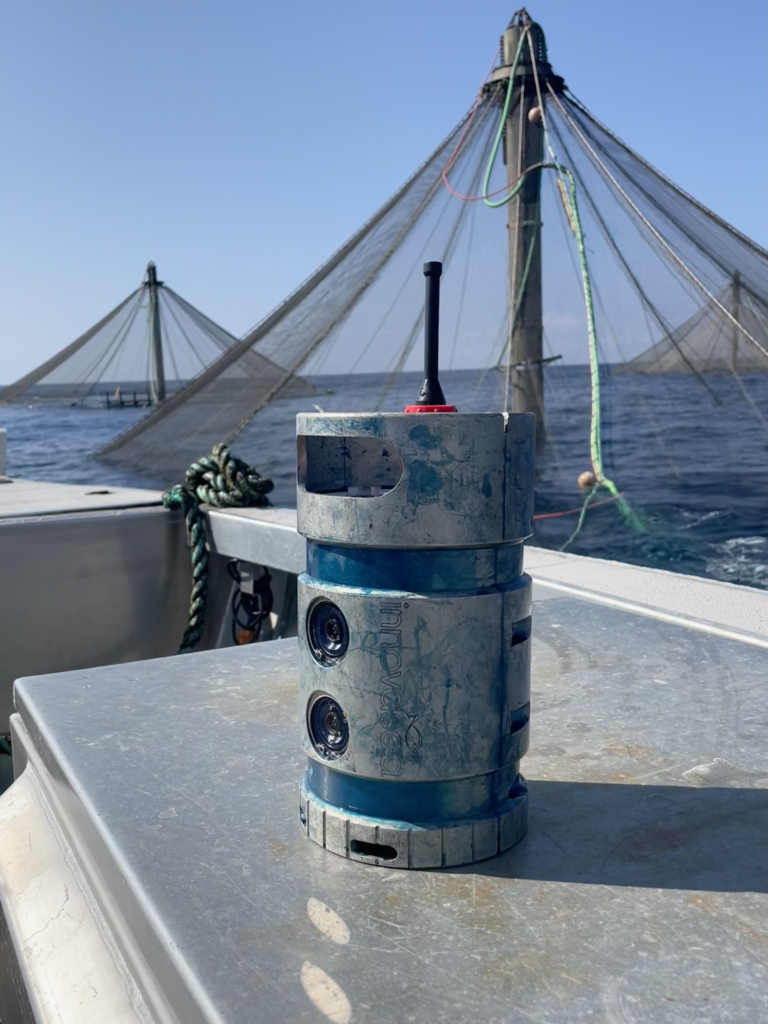
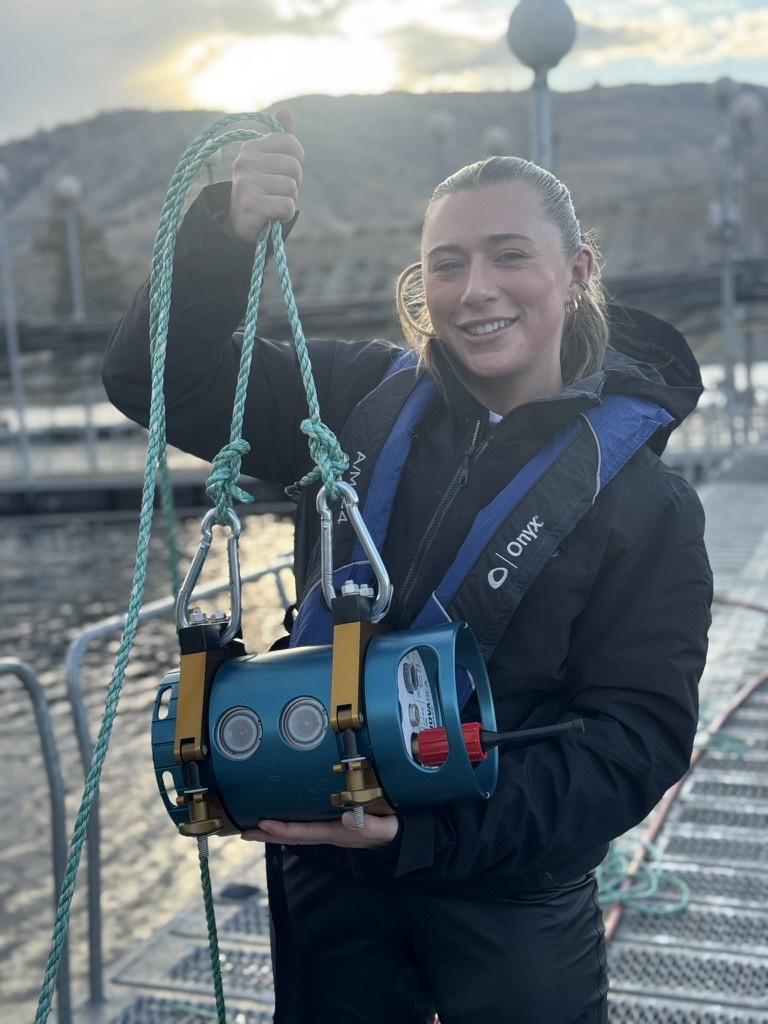
Feeding cameras are constantly moving to find the best viewing angle and are placed below the fish looking upward. While ideal for behavioral monitoring, this placement often does not represent the conditions where fish are most metabolically active. Therefore, a single fixed point on a camera cannot accurately characterize the highly dynamic aquatic environment experienced throughout the cage. In comparison, a wireless sensor can be precisely placed at the desired depth.
#2 Sensor stability and measurement accuracy
When environmental sensors move through the water column, they require time to acclimate to new temperature and oxygen conditions. One reason for this is that bubbles can form around the sensor membrane, creating false levels.
Because feed cameras are frequently repositioned to optimize visual coverage, they are more prone to false readings than a moored sensor(s). Thermal time constants directly influence dissolved oxygen calculations, creating transient inaccuracies during adjustment periods as the sensor equilibrates with its environment. Without adequate stabilization time, readings may reflect sensor transition rather than true environmental conditions.
#3 Maintenance burden and operational downtime
Power systems are among the most common failure points in marine electronics. Maintaining continuous camera operation for sensor data increases unnecessary stress on power supplies, connectors, and cabling. All of this leads to parts failing sooner and more often.
Not to mention, most sensors need to be calibrated yearly to maintain their accuracy.
Servicing a camera-integrated sensor often requires removing both the visual and environmental data streams simultaneously. Losing both your eyes and data at the same time increases operational risk and downtime. When kept separate, farms maintain flexibility and pen insights when one is being serviced.
#4 Energy efficiency and cost considerations
With energy costs at historic highs, efficiency matters. Powering a large, energy-intensive camera continuously, solely collecting water quality data is inherently inefficient.
This approach increases operational costs and infrastructure requirements while delivering no added environmental insight.
When the same level of detail, if not greater, can be achieved at a fraction of energy usage, why would farms want to incur unnecessary additional costs?
#5 Data context and historical analysis
Environmental data is only useful when it is accurate. Camera-mounted sensors often lack precise depth control or consistent positional reference, making historical comparisons and long-term trend analysis difficult.
Without knowing whether changes are environmental or location-driven, decision confidence is reduced. When even small changes can have an outsized impact, having precise, repeatable data is paramount.
#6 Vertical insight into DO variability
DO varies significantly throughout the water column due to thermal stratification, biomass respiration, and feeding activity. A single-depth sensor cannot capture this complexity due to the movement limitations I already mentioned.
Water column profiling is increasingly recognized as a best practice, enabling operators to understand oxygen availability at all biologically relevant depths and respond proactively. With sensors, farm managers can quickly find this ideal space without disrupting their operations.
The choice is clear
Purpose-built, environmental sensors deliver a solution that camera-integrated sensors cannot replicate. Independent sensors offer stable positioning, continuous data collection, and greater analytical clarity. Innovasea’s distributed sensing approach prioritizes biological relevance, system reliability, and decision-ready intelligence. When oxygen levels directly impact fish health, growth, and survival, uncompromised measurements are essential.