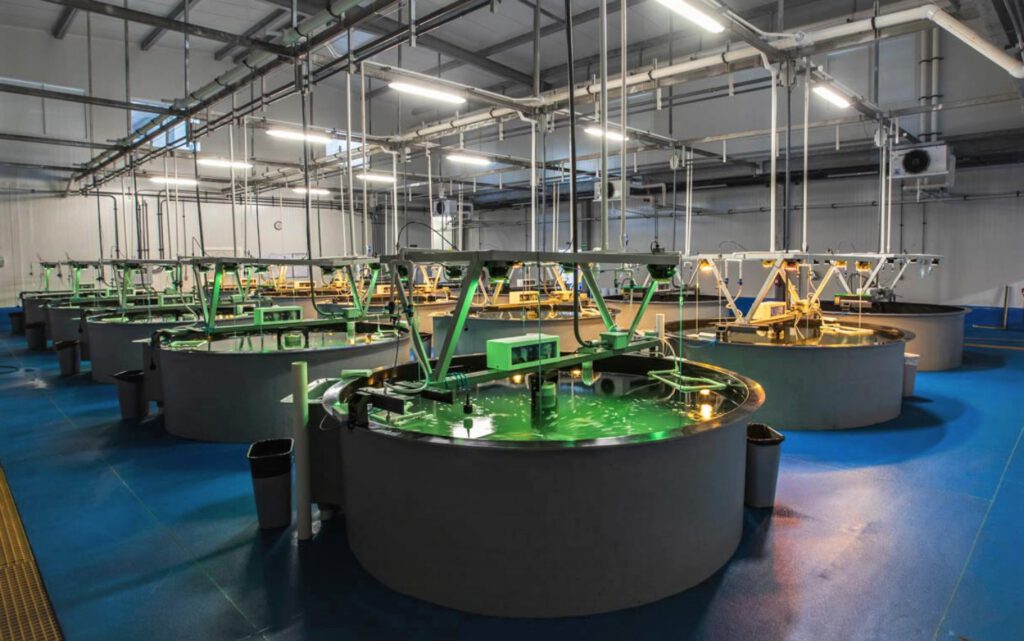
Recirculating aquaculture systems continue to prove their mettle as one of the best ways to raise healthy, marketable fish. It’s clear to many in the aquaculture realm that RAS systems like these will continue to grow in popularity because they offer:
- Better control over water quality to optimize fish health, welfare and growth
- Closer proximity to end markets to reduce distribution costs
- Year-round growing regardless of location
Unfortunately there’s no easy, back-of-the-envelope answer. There are so many variables to consider that it can be hard for entrepreneurs to assess whether RAS-based aquaculture is a prudent investment before they begin spending money on a project.
Among the key considerations are:
- Where to locate a facility
- Source of water
- Energy costs
- Size of the operation
- Regulatory environment
- Construction costs
- Availability of qualified staff
The free, 14-page ebook covers site selection and start-up costs and examines capital and operating expenses. It then does a side-by-side financial ROI comparison for two “typical” fish farms – one raising freshwater Atlantic salmon, the most commonly produced species in RAS systems, and the other raising red snapper, a promising tropical marine species with high potential.
It’s a quick read, and when you’re finished you’ll understand how to look at RAS-based fish farming through a financial lens. Download your free copy today.