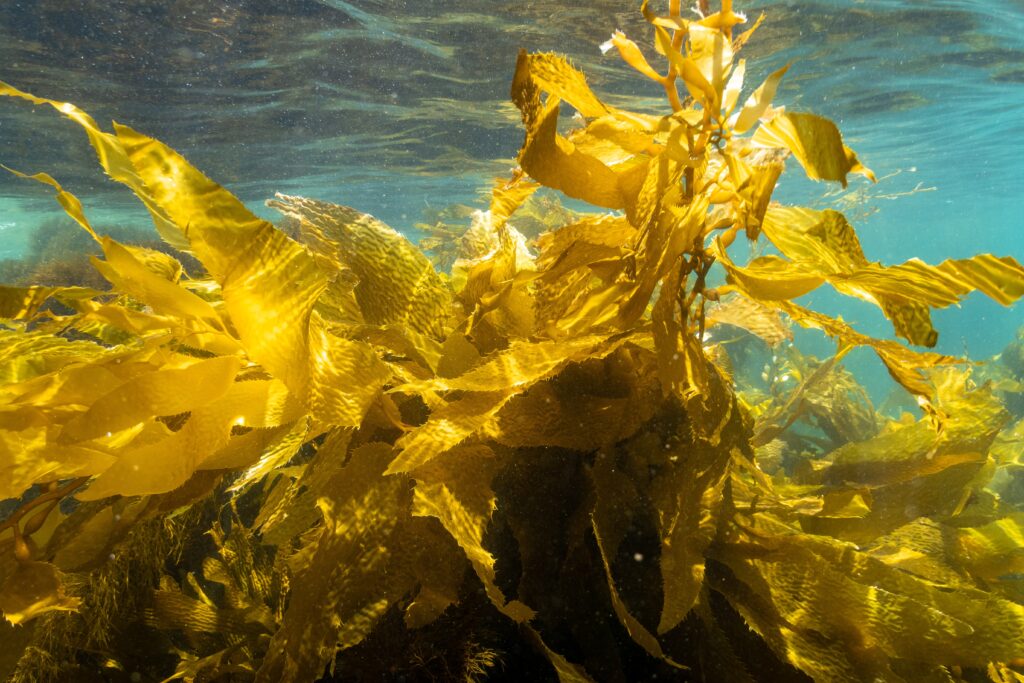
Off the coast of Las Cruces, Chile, sits a tiny, protected kelp forest. How small? Well, at just 17 hectares, it is Chile’s smallest marine protected area.
Despite its size, this environment is critical to the survival and conservation of several species of rockfish, threatened both by overexploitation and a lack of knowledge about their basic biological characteristics. Established during the 1980’s, making it one of the oldest Marine Reserves in South America, it remains a critical environment today.
Challenge
In 2021, a team at Subtidal Ecology Laboratory, headed by Dr. Alejandro Pérez Matus from the Universidad Católica de Chile, at ECIM (Estación Costera de Investigaciones Marinas) and funded by the Fondecyt Grant, began an initiative to track and evaluate the movement patterns of different rockfish species and their interactions with the kelp forest and adjacent habitats.
Their objective was to determine how far the rockfish traveled and how much time they spent inside versus outside the protected marine areas. Together, these valuable insights would shed light on how they used this critical environment and guide future actions for ongoing management and conservation.
“Conducting the study was a real challenge, mainly due to the environmental conditions of the study site and the difficulty of capturing the fish without causing physical damage from capture,” said Gabriela Winkler, Research Assistant and the veterinarian in charge of the project.
A member of the Subelab team collects eggs from the kelp forest
Solution
At the beginning of the project, the team had reservations about whether acoustic telemetry was the best option for the study given the area’s challenging conditions. High noise levels (average 550 mv), limited access to check the receivers, high upwelling and rough waters, were all concerns.
However, Innovasea’s acoustic telemetry technology quickly proved it was the best option to monitor the movement and fine-scale use of space of their target species.
To conduct the study, the team selected 13 VR2Tx receivers, due to their range and battery life, and an array of V9 and V13 tags. Over the next four years, the lab then tagged and tracked 88 different animals, covering six species: Aplodactylus punctatus, Chirodactylus variegatus, Graus nigra, Pinguipes chilensis, Schroederichthys chilensis and Psammobatis rudis.
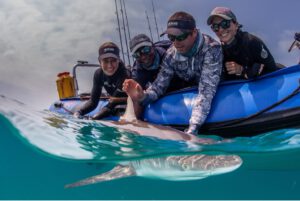
Alejandro Perez Matus releases a taged Schroederichthys chilensis
Results
Despite initial concerns over the high-energy study environment, Innovasea’s solution delivered vast amounts of high-quality data. This showed just how far the species covered and confirmed the need for a larger protected area.
The tags had to be surgically implanted, and the study gave the team the opportunity to collect valuable data even before the tags were in the water. Previously, very little research had been done on the ideal levels of anesthesia for each species. Throughout the study, a species-specific anesthesia protocol for acoustic transmitter implantation was developed and evaluated, resulting in high post-release survival rates.
The team is now analyzing the data and will publish its findings later this year. Although there is still work to be done with this study, Subelab has already secured a grant for a second four-year project. This new study will build upon the previous one and aims to track the species at a different study site, including a depth gradient down to 80 meters.
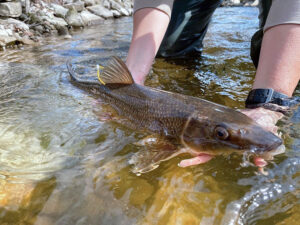
Juan Carlos Gonzalez, in charge of catching and releasing fish released a tagged Graus nigra