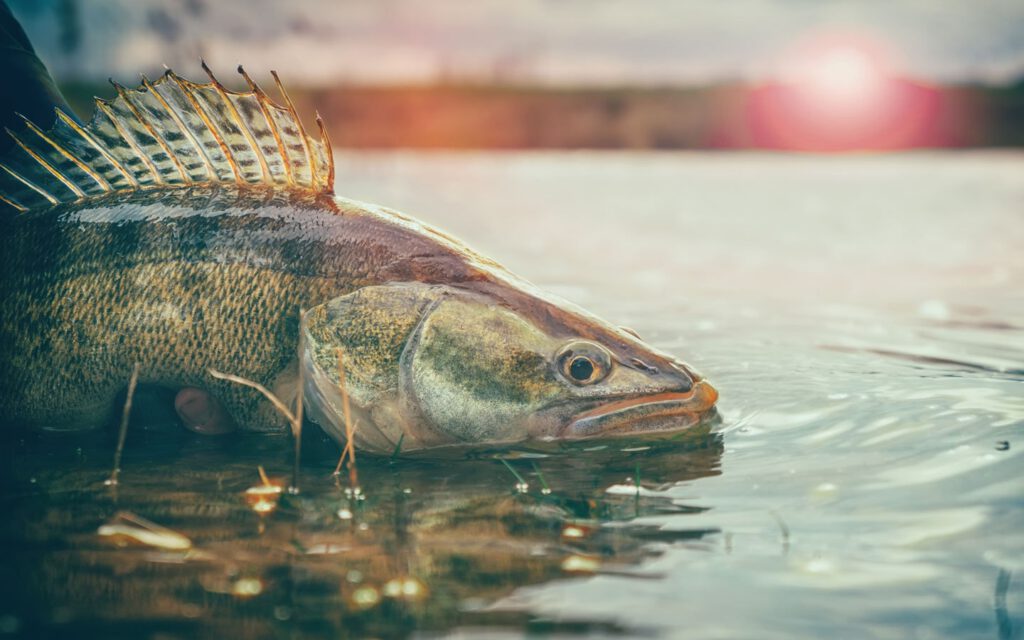
Vermont’s Ed Weed Fish Culture Station on Lake Champlain rears four species of trout as well as landlocked Atlantic Salmon and Walleye. When it needed to cut the cost of heating frigid lake water for its tanks, Innovasea helped it transition to a state-of-the-art recirculating aquaculture system (RAS).
Challenge
In operation since 1992, the Ed Weed Fish Culture Station’s early rearing production sector was originally designed with 56 rectangular tanks that operated on single pass flow-through that used up to 2,000 gallons per minute from Lake Champlain. The water was continuously pumped uphill 700 feet from the lake and heated to 50 degrees to provide sufficient temperature to meet production goals. This inefficient process generated enormous electric and propane costs for the Vermont Fish & Wildlife Department.
Solution
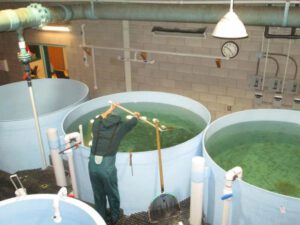
Over the course of four years, Innovasea designed a series of recirculating aquaculture systems (RAS) for the hatchery. The modern, energy-efficient closed loop systems reduced lake water usage to a maximum of 70 gallons per minute, enabling the facility to downsize from a 250 horsepower water pump to a 100 horsepower pump. The systems also utilized a circular tanks for rearing units, which improved waste management and provided more exercise for the fish, improving their health.