
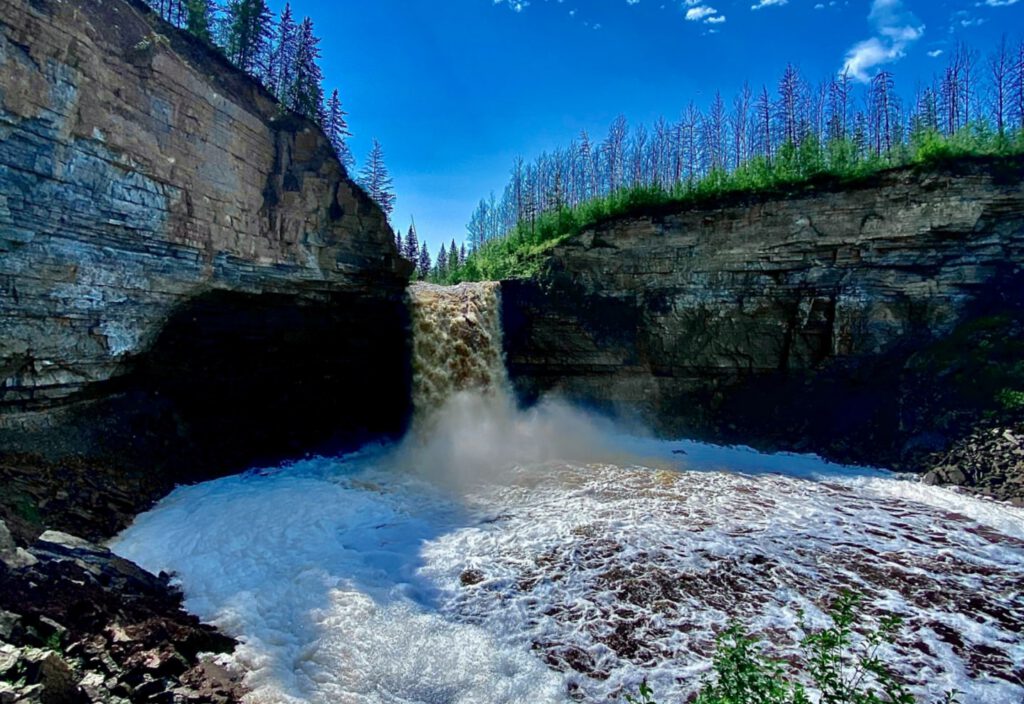
Parks Canada is developing a strategy to protect and manage the ecological health of Wood Buffalo National Park in Alberta, the second largest national park in the world.
In 2020 Innovasea was hired to design a comprehensive, multi-year study of the seasonal movement and behavior of multiple fish species in the Peace-Athabasca Delta (PAD) region of the park, including Walleye, Northern Pike and Lake Whitefish.
Challenge
Significant knowledge gaps remain in scientific research about fish behavior in the Peace-Athabasca Delta, including movement rates, timing, environmental conditions, migration routes, life stage specific movement behaviors and habitats utilized for fish species. Plus the sheer size of the area in which these species live and travel makes it difficult for to conduct meaningful research on such a massive scale.
Solution
Innovasea performed a feasibility assessment and developed a comprehensive blueprint on how researchers can use acoustic telemetry technology to evaluate basic life history behaviors and examine how oil sands mining, climate change, water flow variations and other potential factors may be impacting the movement and distribution of resident and migratory fish populations.
Result
The study design demonstrated that acoustic telemetry is the ideal technology for conducting long-term fish movement studies over a vast geographic area because it’s: