
Predation
Patented transmitters help you identify predation events once and for all
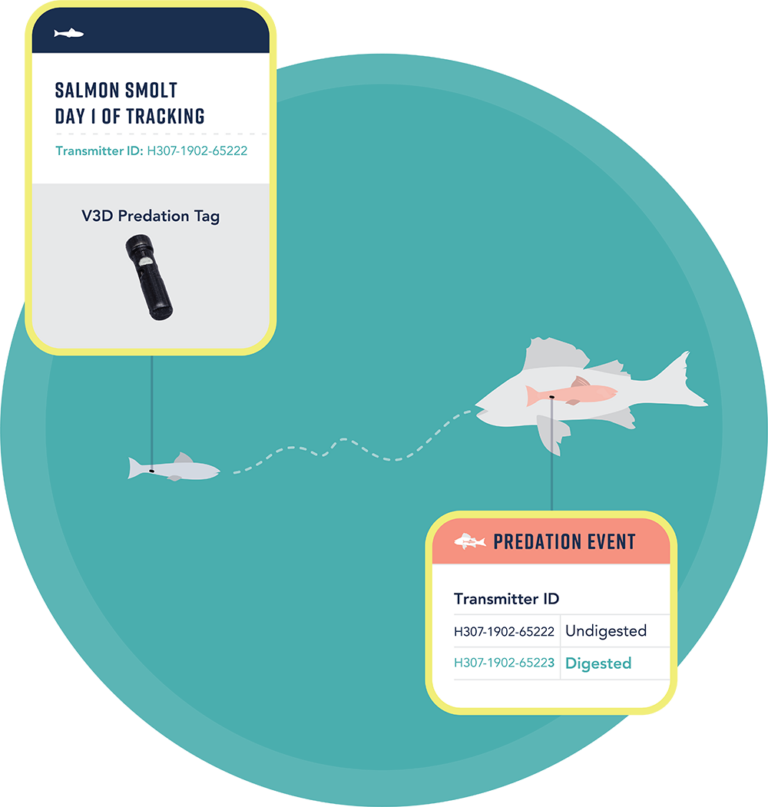
For years, aquatic animal researchers could never be sure if their detections were coming from the animal they tagged or from the stomach of a predator. To identify such predation events, they had to rely on indirect measures like acceleration or make subjective assessments of animal behavior.
Innovasea’s groundbreaking predation tags helps eliminate guesswork and enables you to further explore novel questions while increasing the certainty with which you can interpret animal behavior.
How predation tags work
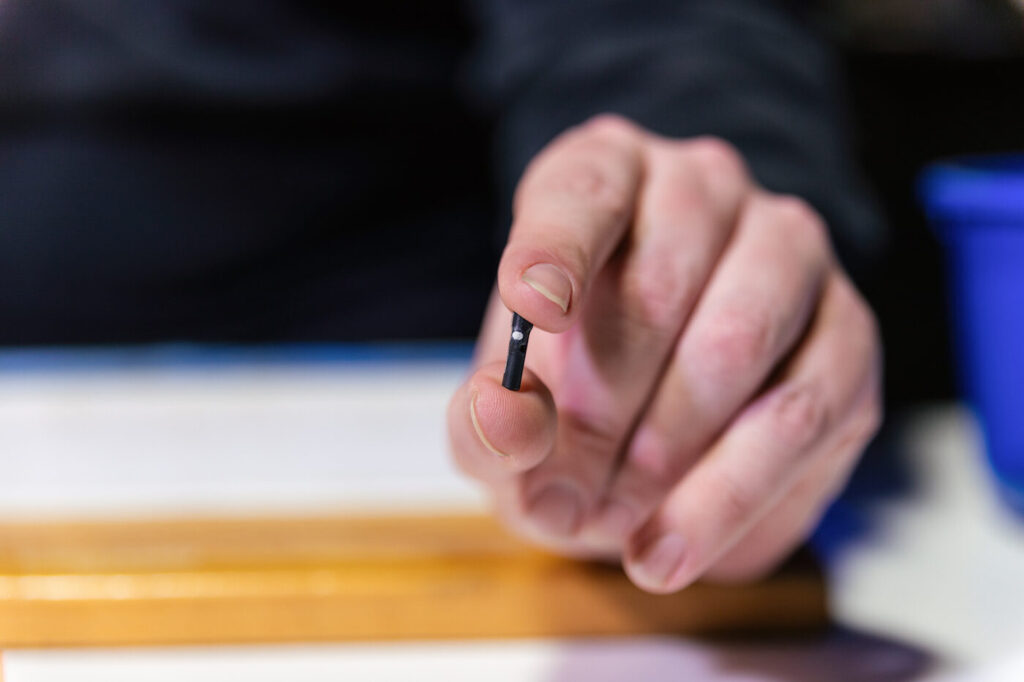
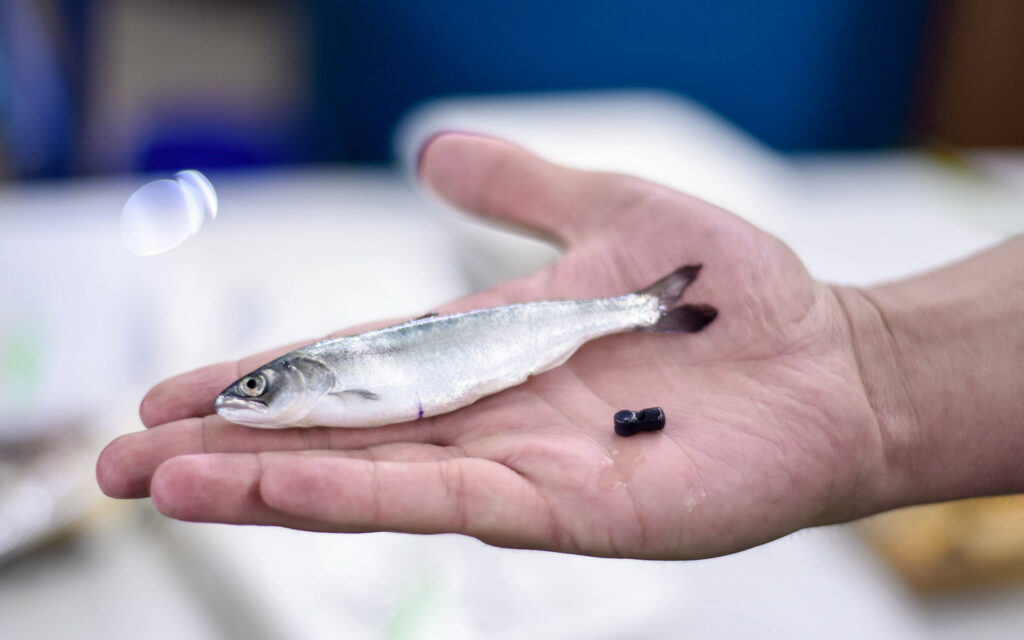
Innovasea’s patented technology uses an inert polymer covering. The covering gets broken down by the stomach acids of a predator during digestion, at which point the tag triggers a predation event.
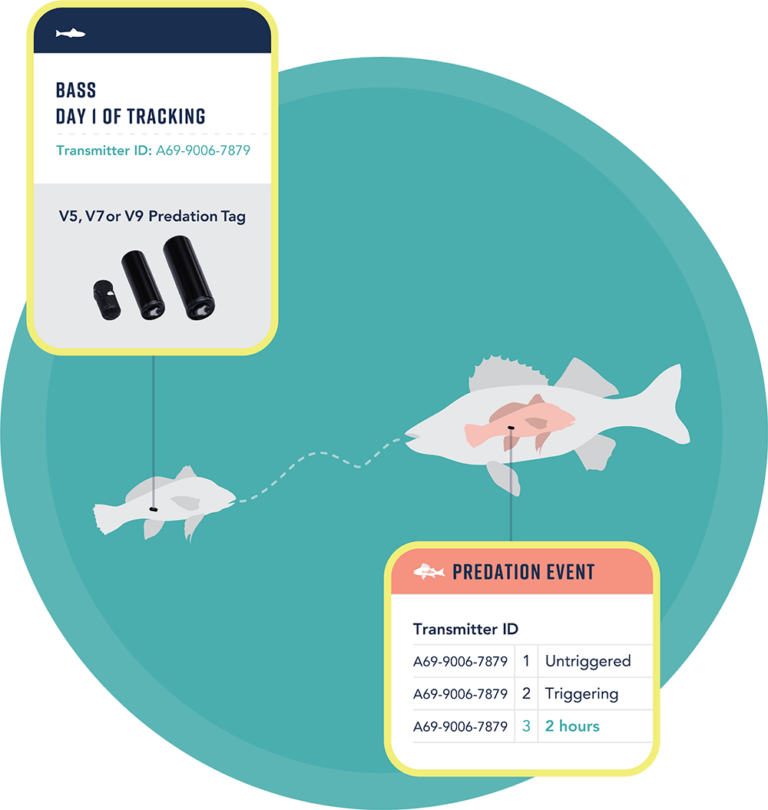
The transmitted data output from the V5D, V7D and V9D predation tags is the time since the tag was triggered.
The transmitted data output from the V5D, V7D and V9D predation tags is the time since the tag was triggered.
How predation tags can be used
Validate mark recapture survival models
The mark-recapture technique uses random sampling to estimate mortality within a population where it is impractical to count every individual. Detection data from predation tags can be used to validate and strengthen models.
Separate predation mortality from other types of mortality
Natural mortality is the removal of fish from the stock due to causes other than fishing. Predation data can help scientists, resource managers and other decision makers determine the effectiveness of restocking and remediation programs.
Investigate impacts of invasive species
Invasive species can cause extinction of native animals, reduce biodiversity, compete for limited resources and alter habitats. Predation tags help paint a clearer picture of the impact of an invasive species within a particular ecosystem.
Study trophic energy transfer
The complex trophic structure that maintains balance between organisms is patterned on the feeding relationships between organisms within an ecosystem. Predation tags allow researchers to gain insight into how energy is being transferred between trophic levels.
Understand predator/prey behavior
Predation tags can provide greater insight into dominance, prey selection, genetic characteristics, population dynamics, water quality and other factors that have an impact on predation success.
Case Study: Tracking Salmon Juveniles in a South Dakota Lake
Researchers are using Innovasea’s advanced acoustic telemetry solutions to answer questions related to salmon stocking, including optimal size for release, ideal release locations, where the fish travel and how they’re affected by predators.
How researchers are using predation tags
Identification of predation events in wild fish using novel acoustic transmitters
Amy A. Weinz, Jordan K. Matley, Natalie V. Klinard, Aaron T. Fisk and Scott F. Colborne
Jason Daniels, Stephen Sutton, Dale Webber and Jonathan Carr
Daniela Notte, Robert J. Lennox, David C. Hardie and Glenn T. Crossin

Three quick questions about fish predation and survival
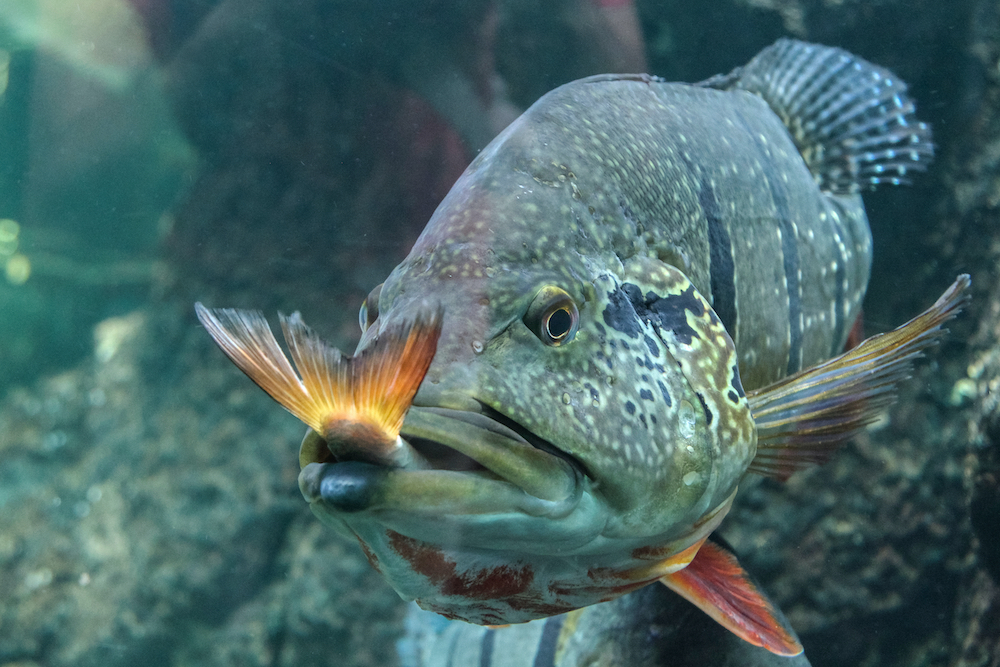
Predators can cause major headaches for researchers studying fish behavior. Innovasea biologist Dale Webber discusses some of the challenges and outlines the best way to deal with them.