Why Mediterranean Aquaculture Needs a Different Approach
Mediterranean aquaculture is a vital but complex sector. With over 1.1 million tonnes of finfish produced annually, it plays a central role in the region’s food security and economy. But unlike large-scale salmon farming operations, Mediterranean aquaculture is defined by its species diversity, fragmentation (mid-sized, family-owned, multi-pen farms), and heightened exposure to environmental volatility.
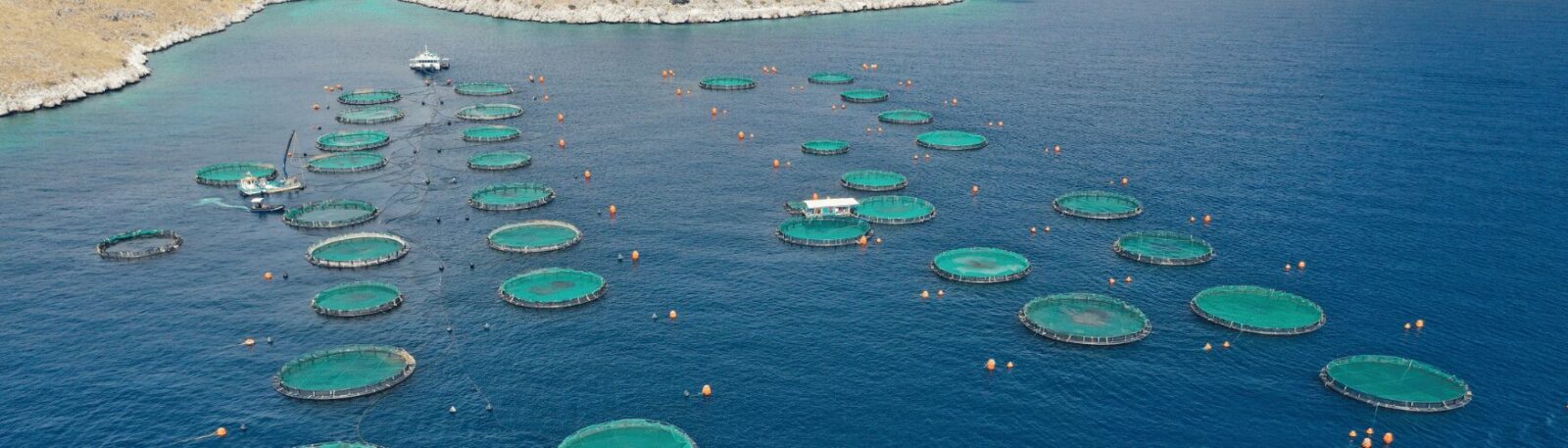
Whereas salmon farms typically operate a few large pens in cold, nutrient-rich fjords, Mediterranean farmers often manage up to 60 smaller pens of a diverse species selection, located in warm, nutrient-poor and high-salinity waters.
Key species include sea bass and sea bream, which dominate production, but farms also grow trout, tilapia, meagre, red porgy and seriola – each having their own distinct environmental needs, growth cycles and market dynamics.
Furthermore, these farms often have limited supporting infrastructure and no on-pen power—making them uniquely vulnerable to environmental stress and operational inefficiencies.
To thrive in this environment, farms need scalable, modular, and data-driven solutions tailored to their specific challenges—not just adaptations of salmon farming technologies.
In this blog we’ll explore the path to implementing precision aquaculture, and the value this can unlock for the farmers. But first, we’ll take a closer look at the unique challenges of the area.
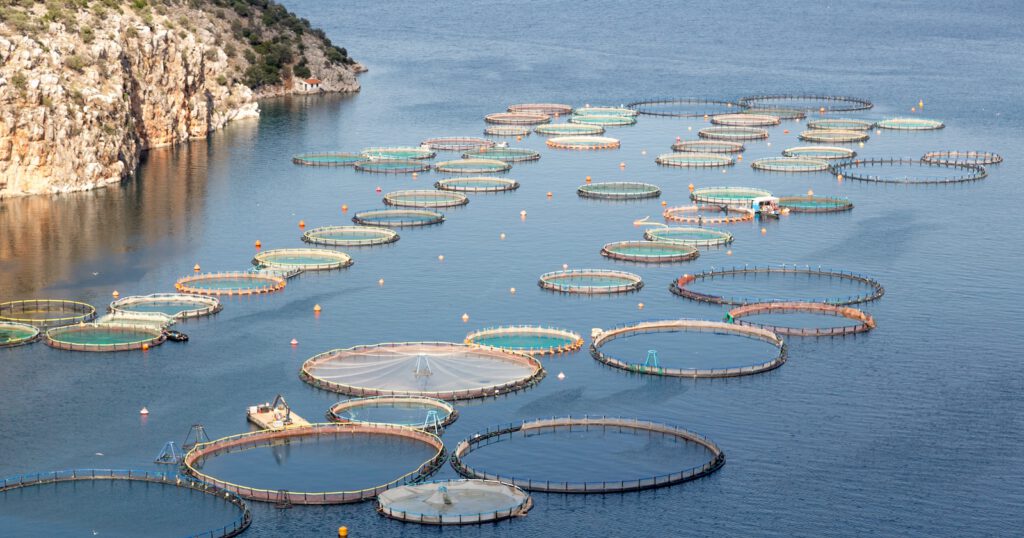
Mediterranean Aquaculture Challenges
Mediterranean fish farmers face a unique set of pressures:
- Environmental volatility: High temperatures, salinity, and low nutrient levels create unstable growing conditions.
- Infrastructure limitations: Most farms lack barges, on-pen power, or centralized feeding systems.
- Operational and logistical hurdles: Many farms are remote and lack on-pen infrastructure, making feed delivery and management more labor-intensive and less efficient. This contributes to higher operational costs compared to other regions.
- Biological and disease pressures: While mortality rates in the Mediterranean (typically 14–16%) are in line with global averages, in 2025, sea bass mortality rose sharply, with some farms reporting rates of over 30%. Linked to extreme marine heatwaves, endemic viruses like Viral Nervous Necrosis (VNN), and environmental or management factors such as poor water quality and overcrowding, these challenges have led to reduced stocking, higher production costs, and increased market prices due to lower supply.
- Seasonal stressors: Summer brings oxygen depletion, feeding inefficiencies, and increased risk of disease outbreaks, including Amyloodinium ocellatum, a dinoflagellate parasite that thrives in warm, low-oxygen waters.
Four Practical Pillars for Implementing Precision Aquaculture
To help Mediterranean farms modernize sustainably, a phased, practical framework for precision aquaculture is emerging. It focuses on affordability, scalability, and ease of integration.
#1 Know Your Water: Environmental Monitoring
Effectively growing a wide range of species requires knowing real-time water conditions—down to the specific pen. This precise data is critical for farm managers dealing with the fluctuating environments and nutrient-poor zones typically present in the Mediterranean Sea.
From monitoring dissolved oxygen (DO) levels to tracking water temperature, salinity, and even currents, operators can leverage this data to improve feeding and better protect fish from harm.
Today, some wireless sensors, such as Innovasea aquaMeasure sensors, can securely collect and transport this data to the cloud via cellular, Wi-Fi or Iridium satellite for real-time analysis.
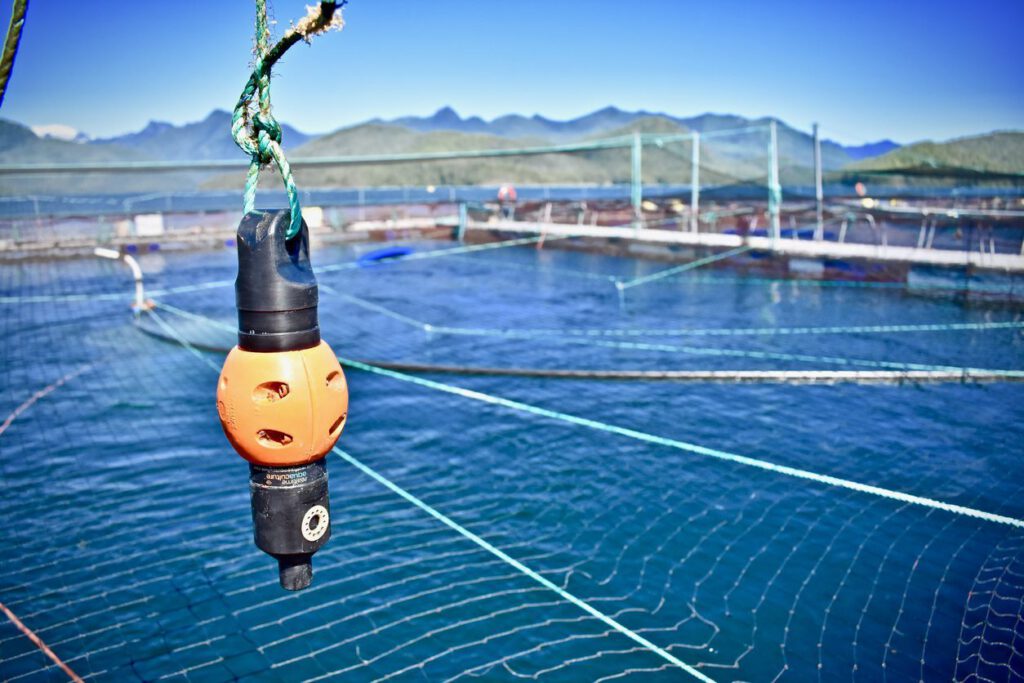
Innovasea’s aquaMeasure sensor delivers real-time environmental data
#2 Feed Smarter: Biomass Estimation & Feeding Control
Feeding is one of the biggest cost drivers in aquaculture—especially in the Mediterranean, where logistics and infrastructure can make it even more expensive. That’s why precision feeding starts with knowing exactly how much your fish are growing (and consuming).
Stereoscopic cameras and AI-powered models (like those developed by Innovasea’s BiomassPro for sea bream and sea bass) help estimate biomass without manual sampling. This data feeds directly into automated systems that adjust feed delivery based on fish size and environmental conditions—reducing waste, improving FCR, and minimizing environmental impact.
Furthermore, accurate biomass estimation can help farms better track fish growth and even help spot diseases for earlier intervention.

Want to improve your FCR?
Learn about the biggest contributors to high feeding costs, and the actionable steps farms can take to resolve them. Download our free ebook How to Improve Your Feed Conversion Ratio
#3 Connect the Dots: Farm Management & Insights
Precision aquaculture isn’t just about collecting data—it’s about making it useful. Farm management platforms help centralize information from sensors, cameras, and operations into one place.
This enables traceability, supports compliance reporting, and helps managers benchmark performance across pens or sites. Over time, continuous data collection unlocks deeper insights—like identifying trends, forecasting risks, and making smarter decisions faster.
Some farms even experiment with A/B testing of different feed types or suppliers, using real-time data to compare performance across pens. By tracking metrics like growth rates, feed conversion ratios, and fish health status, farmers can make evidence-based decisions about which feed delivers the best results under their specific conditions.
#4 Build for the Long Term: People, Tools & Reliability
Technology is only as effective as the people using it. That’s why training farm staff to operate and maintain new systems is just as important as the tools themselves.
Establishing simple maintenance routines for sensors, cameras, and feeders helps prevent downtime and ensures long-term reliability. And with the right training and support, teams can build internal capacity to manage their farms more efficiently and confidently—day after day, season after season. With greater knowledge and confidence about their systems, farm managers can be more proactive, making small, pointed adjustments every day for better results.
What’s Still Missing—and What the Future Must Deliver
While the Mediterranean aquaculture sector is expanding, there is still room for significant growth with experts predicting a 3–4.5% CAGR through 2030. This is driven, in part, by:
- EU Green Deal compliance bringing funding and regulatory incentives: As the EU pushes for more sustainable food systems, farms that align with environmental and animal welfare standards can access new funding streams, benefit from streamlined certification processes, and gain a competitive edge in eco-conscious markets. In Greece, for example, the lack of full legal recognition for Organized Aquaculture Development Areas continues to delay investment in some regions, due to uncertainty in spatial planning and environmental restrictions. Similar spatial planning frameworks exist across the EU, helping countries balance aquaculture growth with environmental protection and coastal activity coordination.
- Export growth from Turkey and Egypt allowing for regional scale and specialization: These countries are rapidly expanding their aquaculture exports, creating opportunities for economies of scale, regional supply chain integration, and specialization in species or production methods that suit local conditions.
- Digital transformation of mid-sized farms opening up operational efficiency and data-driven decision-making: As more farms adopt digital tools, they can reduce waste, improve traceability, and make faster, smarter decisions—turning data into a strategic asset rather than a burden.
- Consumer demand for traceable, eco-certified seafood is driving market differentiation: Today’s consumers want to know where their food comes from. Farms that can prove sustainability and traceability through digital records and certifications will be better positioned to access premium markets and build brand trust.
Key needs include:
- Visual monitoring tools for real-time insights into fish behavior, stress, and feeding response
- Compliance-ready digital tools for ASC, EU and local spatial planning frameworks reporting requirements
- Localized support networks for training, onboarding, and technical assistance
- Modular, low-power solutions for farms without barges or on-pen infrastructure
A Smarter, More Resilient Future
Precision aquaculture is not just about adopting new tools—it’s about empowering Mediterranean fish farmers to manage complexity, reduce risk, and grow sustainably. With the right framework and support, farms across the region can improve efficiency, fish welfare, and profitability—regardless of size or species.
For more information please fill out a Contact Us from.