

Designing Mixed Acoustic Telemetry Arrays
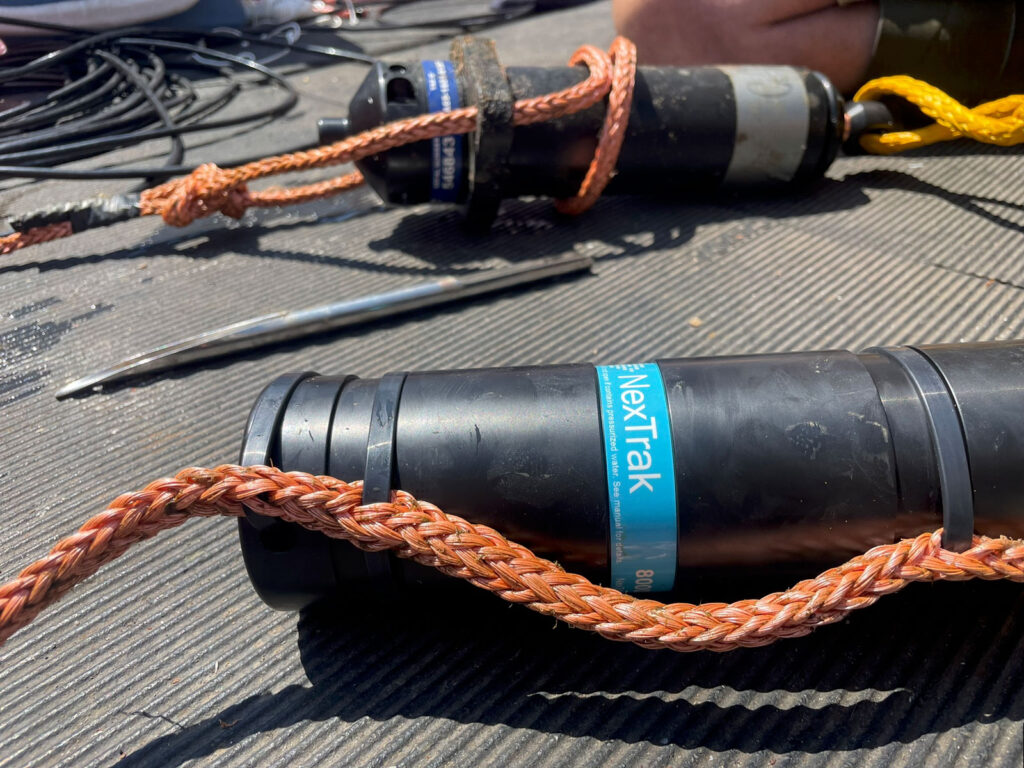
Learn how to effectively integrate NexTrak receivers into your existing VR2 arrays and expand your study coverage.
Receiver configuration plays a critical role in acoustic telemetry study outcomes. As more researchers combine VR2 and NexTrak receivers, understanding how receiver performance influences detection probability, study design, and data interpretation becomes increasingly important.
In this guide we explore practical strategies for integrating NexTrak receivers into established VR2 arrays. You’ll learn how receiver spacing, tag programming, and array configuration can be optimized based on your study objectives and environmental conditions.
Through 11 unique examples covering migration, habitat use, hydropower, and fine-scale positioning applications, we’ll identify and address key parameters to account for improved data quality.
Download the guide for:
- Practical receiver configuration tips based on desired study outcomes
- Use cases for increased residency (IR) tag programming
- Key design considerations that impact detection probability and data quality
Whether you’re planning a new study or upgrading an existing array, this guide offers actionable, research-focused recommendations for improved outcomes.
To download the white paper, simply provide us with a little bit of information: