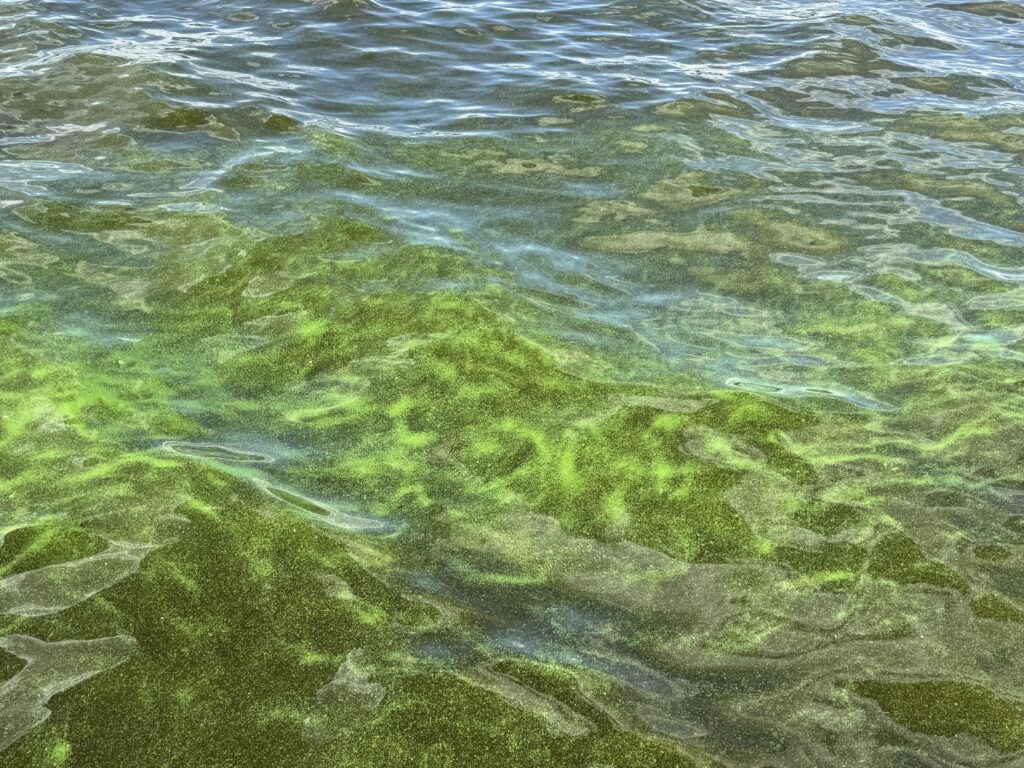
Harmful algal blooms (HABs) have become one of the most disruptive environmental threats for ocean-based fish farms. Once viewed as rare disasters, HABs are now occurring more frequently and with severe consequences.
When blooms occur, traditional surface pens are stuck in limbo. Feeding schedules are disrupted, if not temporarily stopped altogether, while farms aerate the pens. Despite these costly interventions, fish health and growth rates are still impacted, with the added fear of mass mortality always looming.
Submersible systems can change this dynamic.
While HABs may feel unavoidable, their impact is the greatest at the upper layer of the water column and decreases as you move further down. Farms that can completely submerge their operations, below the impacted area, gain a major advantage.
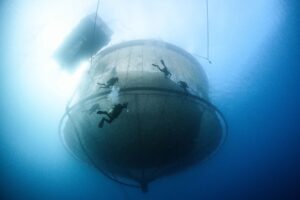
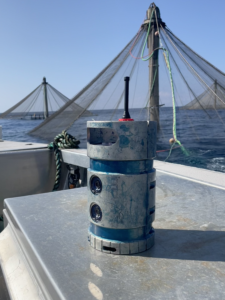
When we talk about a “submersible system,” we mean more than the pen itself. It is the combination of pen technology, environmental monitoring, feeding systems, and supporting infrastructure that allows fish to remain submerged safely for extended periods.
Through this new, stable environment, farm managers remove much of the uncertainty and financial strain that occurs during an algal bloom.
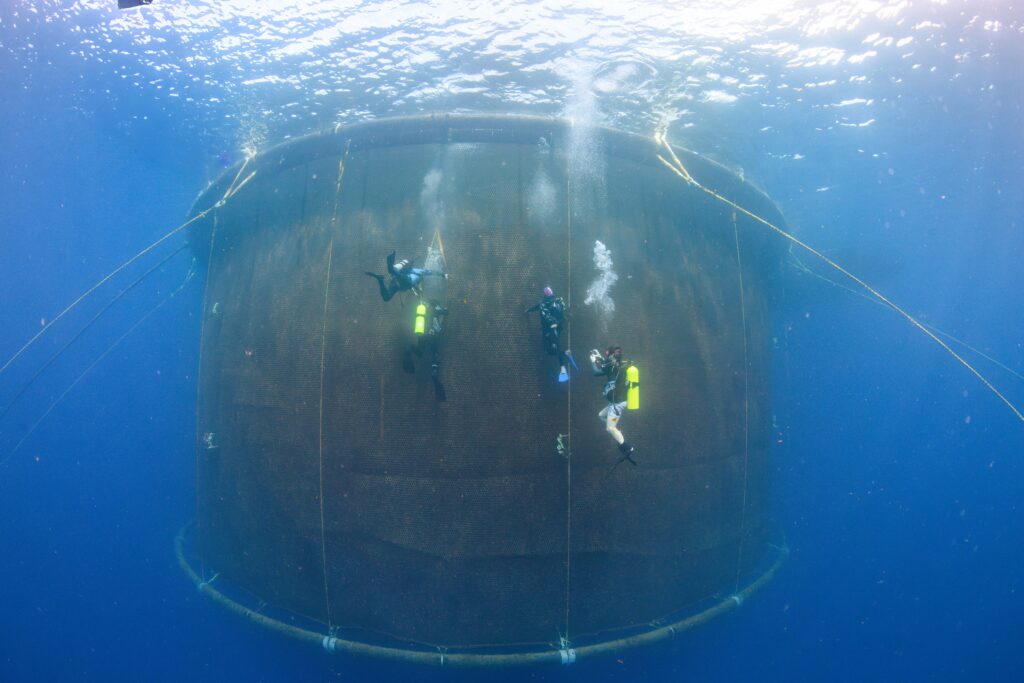
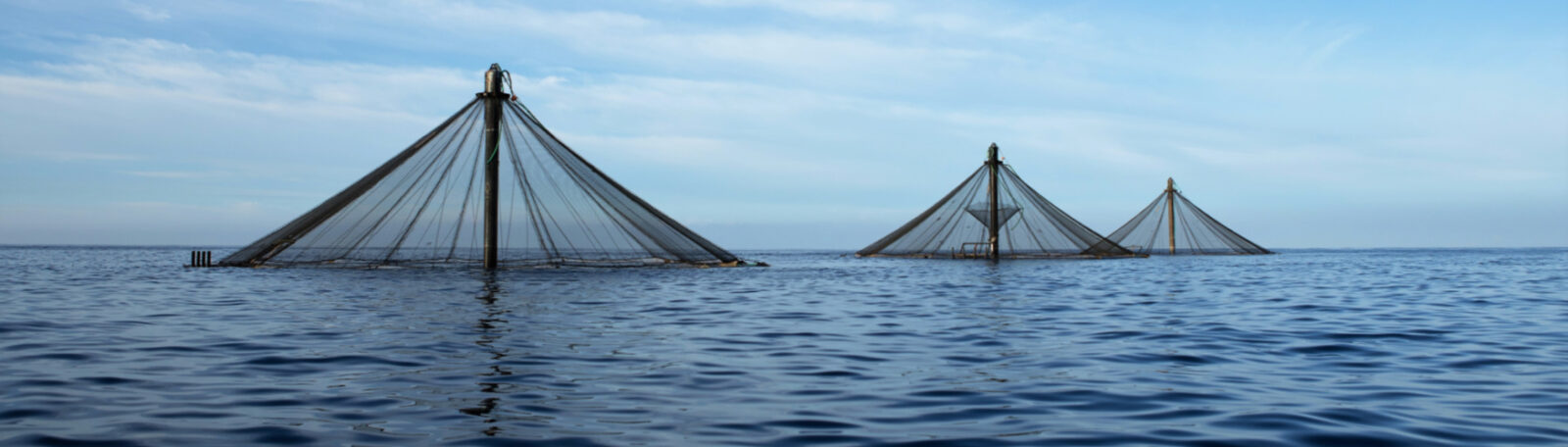
Innovasea’s fully-submersible SeaProtean pen
The true costs of missed feedings
While farm managers often fixate on feed conversion ratio (FCR), nothing disrupts growth projections faster than missed feeding days. When a red tide rolls in, these carefully planned feeding regimens can no longer be followed for fear of exposing fish to toxic conditions. The fish start losing weight, stress levels increase, and the risk of disease outbreaks rises.
So, what is the true financial impact on a surface-pen farm?
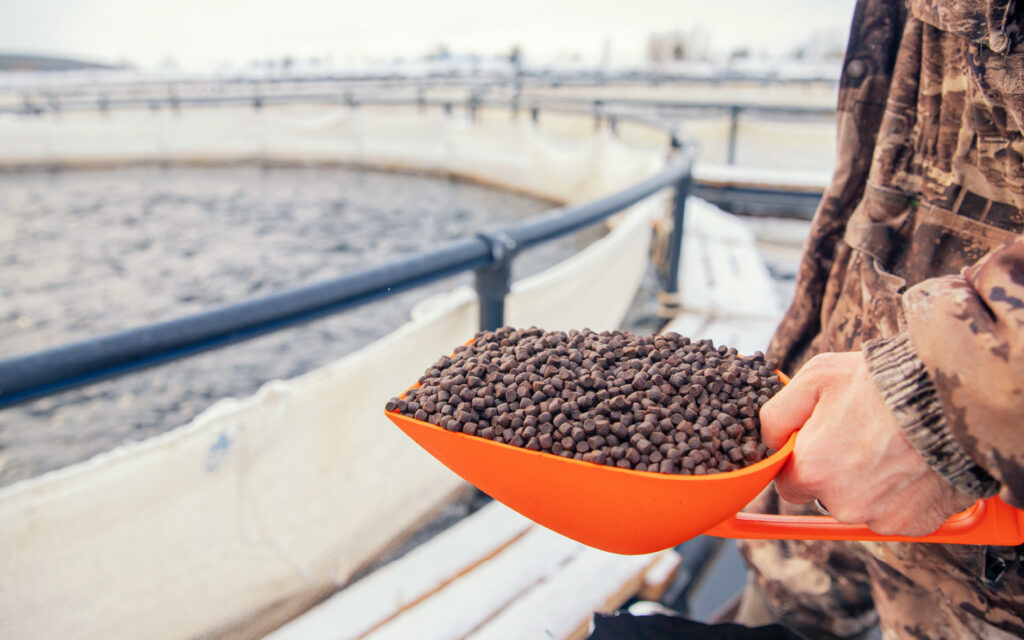
Let’s say you have 1,500 tons of fish in the water and are feeding an average of 0.5% of body weight per day, recognizing that larger and smaller fish have different feeding rates. This would equate to missing roughly 7,500 kg of feed each day.
Now, let’s assume a feed conversion rate (FCR) of 1.2. The 7,500 kg of feed would have generated approximately 6,200 kg of fish growth per day.
Using a simple sale value of $10/kg, that’s over $60,000 worth of fish growth lost every day. Stretch that over a week, and you’re looking at over $400,000 dollars in lost growth, and that’s before considering additional impacts such as reduced fish performance, longer production cycles, or potential health issues.
What’s worse, farms are not just sacrificing growth and extending production timelines, but this approach doesn’t eliminate the risk of mortalities during prolonged bloom events.
With a fully submersible solution, farms can maintain operations, even when others can’t. This combination of preserving growth and eliminating losses delivers a meaningful advantage over the competition.
| Metric | Value |
|---|---|
| Biomass | 1,500 tons |
| Daily feeding rate | 0.5% of body weight |
| Assumed FCR | 1.2 |
| Missed feed (per day) | 7,500 kg |
| Potential fish growth lost (per day) | 6,200 kg |
| Assumed sale value | $10/kg |
| Value of fish growth lost per day | $60,000+ |
| Value of fish growth lost per week | $400,000+ |
Bringing submersible solutions to your site
Submersible pens are shifting aquaculture from fixed-location farming to dynamic, environment-responsive farming, where fish can be actively positioned in the safest and most productive part of the water column using real-time environmental data.
To learn how our submersible offering can improve production performance, talk to an expert member of our team today.
 Erik Vis, who is part of Innovasea’s Aquaculture Services department, brings hands on aquaculture knowledge and experience to the team. He holds an MSc in Aquaculture from Wageningen University in the Netherlands and an MBA from the Norwegian School of Economics (NHH).