For new and/or expanding commercial aquaculture farms looking to grow their business, careful research and planning are needed to give these sites the best chance for success. One critical component is species selection. While it’s often seen as a relatively simple process, choosing incorrectly can prevent a farm from realizing a quantifiable return on its investment, or worse, cause the project to fail altogether.
When considering species selection, farms must examine a few initial criteria that can impact their ability to grow, scale, and achieve the outcomes they’re looking for. Projects should start with the following factors:
Three Factors That Impact Species Selection
#1) Environment
Biological factors are important in determining if the chosen species can thrive in the environment. Data from other farms in the region can be quite informative on whether a species will meet the density, survival, growth, and feed conversion targets set out in the business plan. For farms operating in a location without a history of aquaculture production, contacting nearby universities or research institutions can lead to useful information on environmental preferences. Otherwise, data from other areas can be used even if it doesn’t reflect the local genetics.
As part of this exercise, managers must consider several factors related to water conditions, such as temperature and dissolved oxygen (DO). It is critical to understand the dynamics of the system, accounting for vertical profiles, seasonal variance, and episodic events like storms.
For example, locations that are near steeply sloped sea bottoms often encounter upwelling. Upwelling can be seasonal and predictable, or weather-driven and hard to forecast. Upwelling can create water conditions significantly different from “normal,” resulting in low temperatures, hypoxia, and algal blooms. This is why it’s not enough to ensure that the site’s average temperature is within your species’ thermal preference. Instead, you need to ensure the temperature does not exceed the fish’s thermal stress tolerances, that the thermal growth coefficients will allow for viable growth for all or most months of the year, and that these conditions exist at the depth you’ll keep your fish.
Additionally, it’s important to consider other aspects such as current velocity and wave conditions. Most oceanic fish can withstand and even prefer a lot of exercise, but reef species or bottom-dwelling fish can become stressed if sustained currents are too high or the waves create turbulence in the pen.
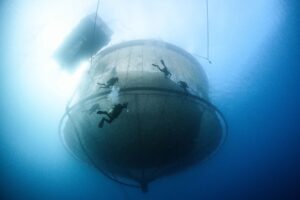
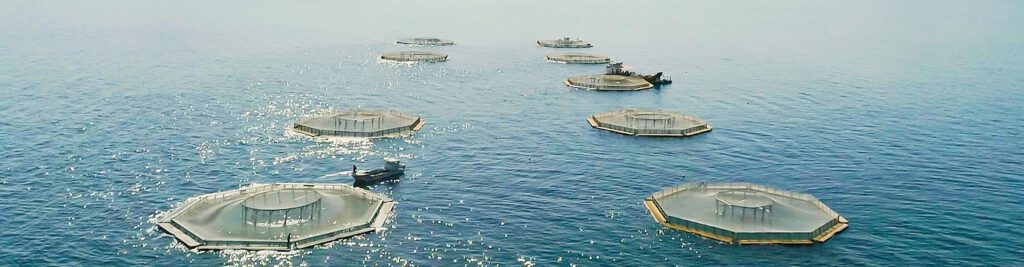
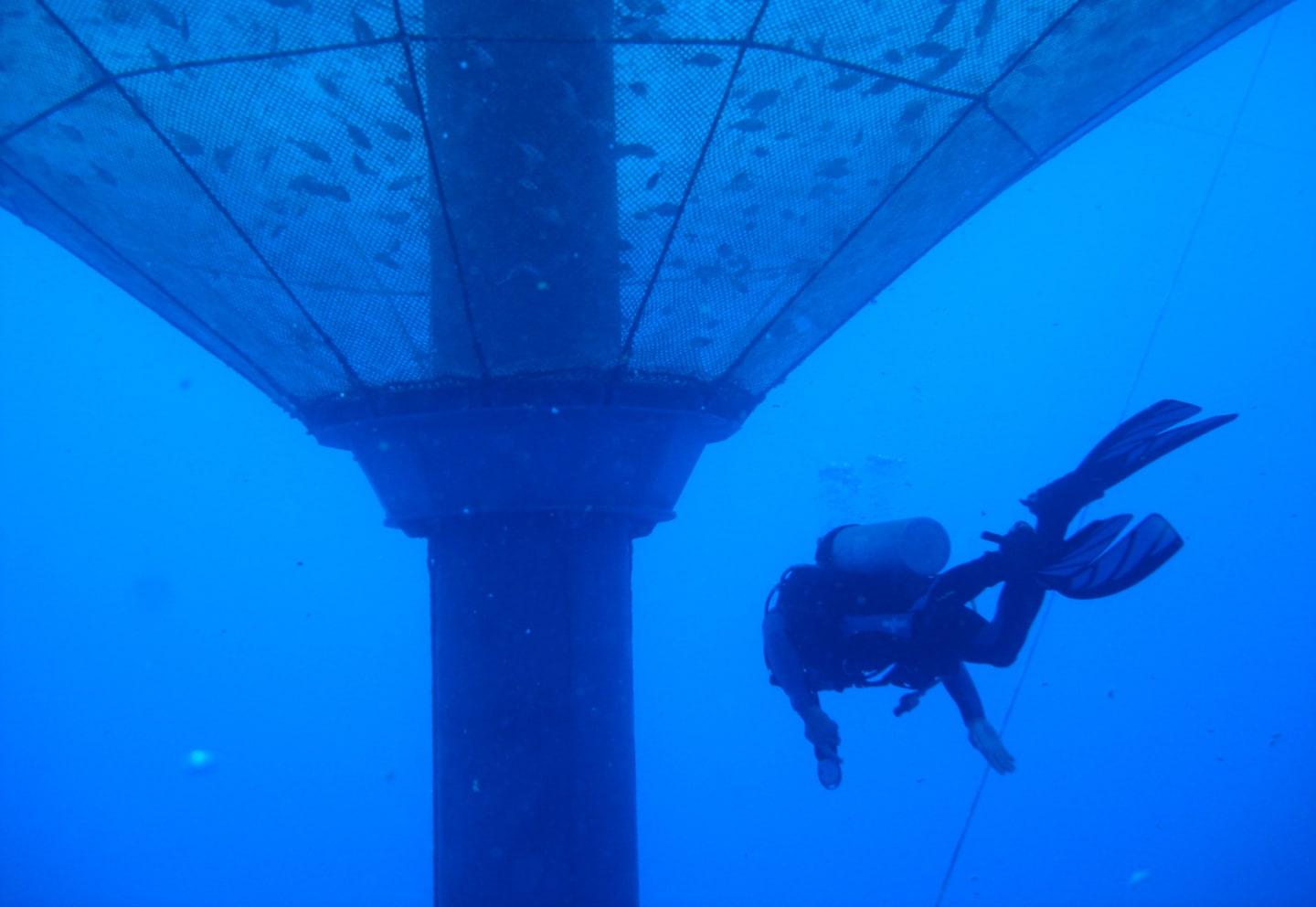
Submersible pens, like Innovasea’s SeaProtean pen, can mitigate environmental risks at a site. By moving the farm underwater, operators can raise fish in more stable water conditions, protect them from storms and environmental anomalies, and avoid exposure to surface conditions which can contain higher parasites loads.
#2 Technology
Another crucial element is determining if the right systems and technology are available to raise the fish, from egg to harvest, effectively. Has this species previously been produced in net pens? Do they require excessively small mesh sizes or abrasion-resistant materials? Can they tolerate extended submergence or vertical movement well? Is species-formulated feed available?
If the technology and protocols are not well tested, a farm operator must factor that into their considerations and determine whether they’re willing to try experimental solutions.
Next, farms must assess how they’ll manage the key early phases of production—broodstock acquisition, spawning, and larval rearing—to ensure a consistent and healthy supply of juveniles. Will this also be done on-site? If not, are there local vendors or facilities that the farm can work with?
Regarding optimizing daily operations, several technological innovations can significantly boost productivity and reduce operating costs. Innovasea’s aquaMeasure wireless environmental sensors allow farm managers to monitor their pens in real time, track DO levels and water temperature to optimize feed delivery and keep an eye on phytoplankton to ensure fish safety.
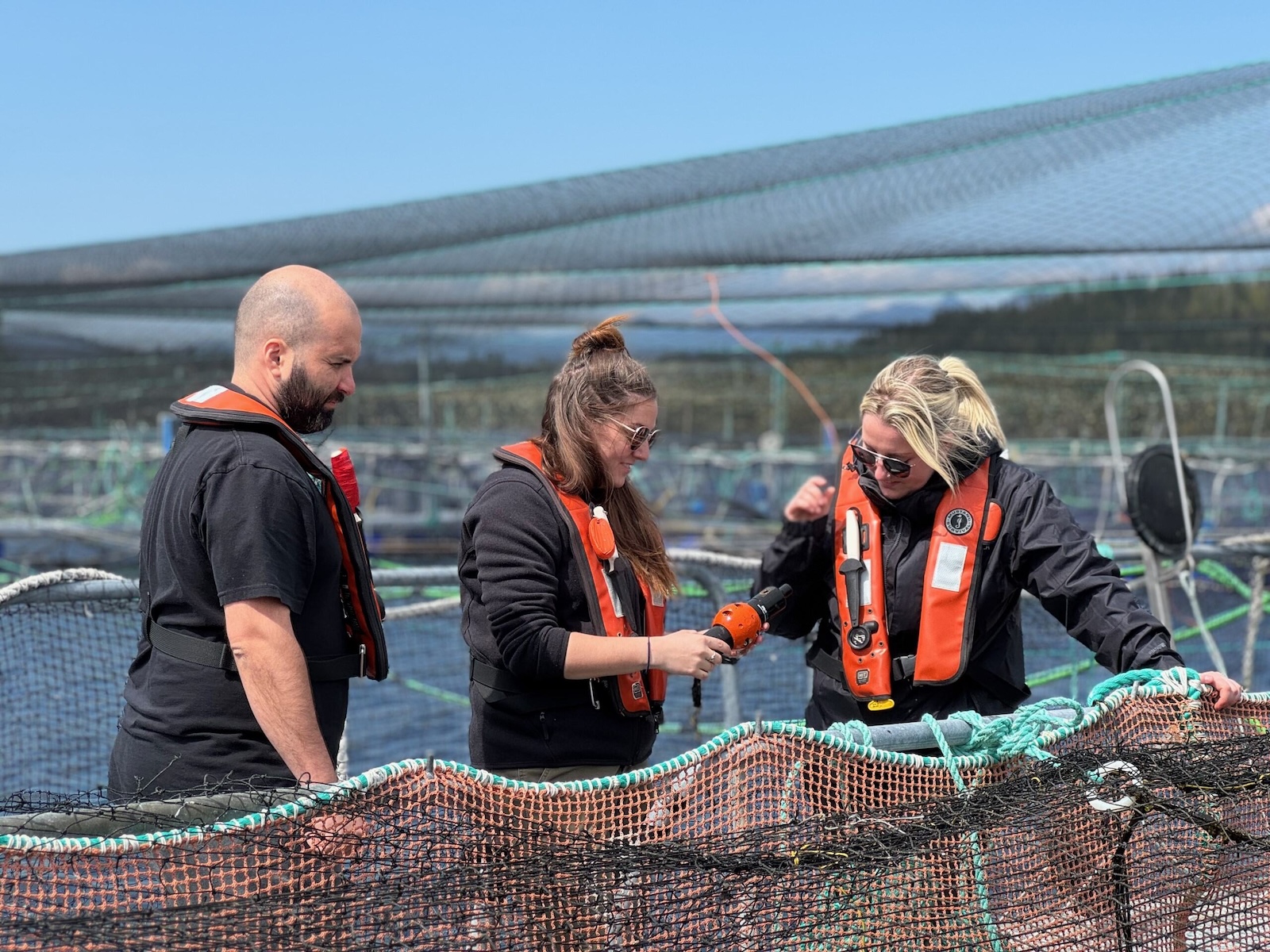
Some solutions even allow for a more proactive approach to controlling the environment. For instance, oxygenation and aeration systems, like Innovasea’s aquaControl, allow managers to track conditions in real-time and instantly improve conditions or mitigate challenges.
#3) Market Demand
Finally, it’s important to understand the needs of potential customers in the market. Customers, ranging from big box grocery stores to niche seafood markets to high-end restaurants, will ideally see the most value in high-quality fish and palatable pricing.
Part of this decision should encompass a thorough audit of the market’s demand and expectations for pricing, quality, and organoleptic details such as taste, smell, and overall flavor.
If there’s limited demand for the species, is it feasible to get them to another market? Building local demand can be a successful strategy on a smaller scale but often requires more time and an investment in marketing. A species may be easy to grow, but without market demand, it can be hard for it to make financial sense.
Gathering this information allows business to better evaluate their potential for revenue against their costs to bring products to market.
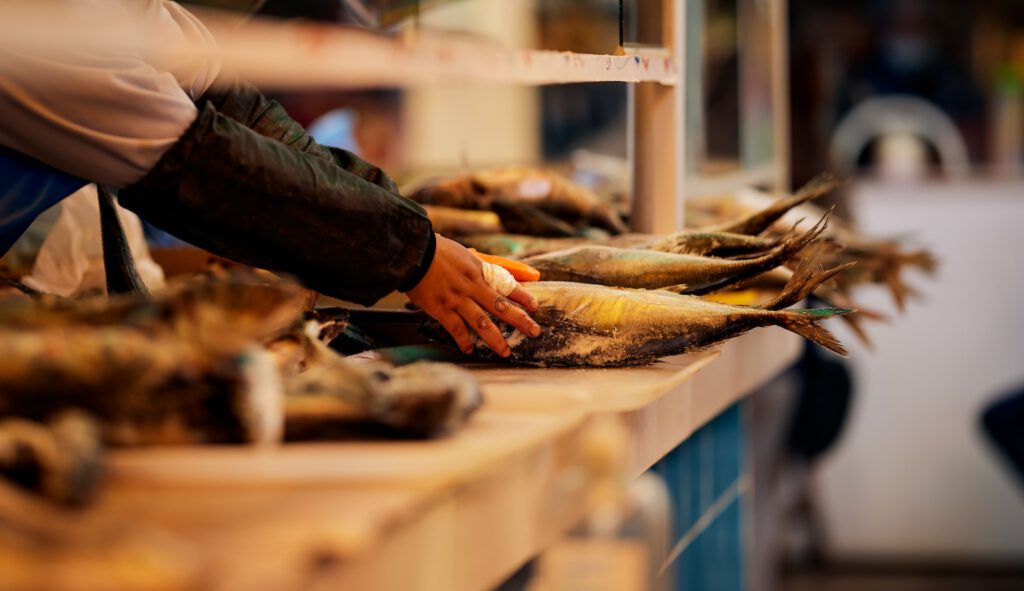
From concept to practice
Innovasea recently completed a project helping a farm with over 15 years of open ocean aquaculture experience evaluate alternative species for a new expansion region. The farm had extensive experience with production costs and sales for their current site and species, but were nervous about why farmers in their new region were struggling with high mortality, low growth, and ultimately production costs that were higher than the market price.
Through careful analysis of the factors above, Innovasea identified some key mistakes that the other farms had made in selecting their species.
One issue was overlooking the extremes in water temperature. Although the temperature at the new site was excellent most of the year, the summer highs pushed up against the fish’s thermal tolerance level. During El Niño years, temperatures reached even higher, leading to extensive mortality.
Several additional issues were also identified that didn’t seem critical in themselves but, considered together, created cumulative stress in the fish that resulted in poor health and low growth for several months of the year.
Choosing a New Species? Innovasea Can Help
Effective species selection is a detailed and data-intensive process that is intrinsically joined with site selection. By evaluating all biological, market, and technological factors, farms can make an informed decision that will set them up for long-term success.
At Innovasea, we’ve helped fish farms around the world set themselves up for success for over 30 years. Whatever you need, we have the open ocean experts on staff – from ocean engineers to data scientists to farm managers, who are ready to listen and find the solutions that work best for your farm.
Talk to our aquaculture experts to learn more today.